
How to Build a Strong Portfolio for Architecture and Design Courses Abroad
For architecture and design applicants, a portfolio is not simply an additional document.
It is often the clearest evidence of how you:
- Observe
- Research
- Generate ideas
- Solve problems
- Experiment
- Develop concepts
- Communicate visually
- Reflect on your work
Your transcript shows the subjects you completed. Your CV lists your software, internships and achievements. Your motivation letter explains why you selected the programme.
The portfolio shows what you can actually do.
A strong portfolio does not need to contain only perfect final renders, professionally photographed models or completed commercial projects.
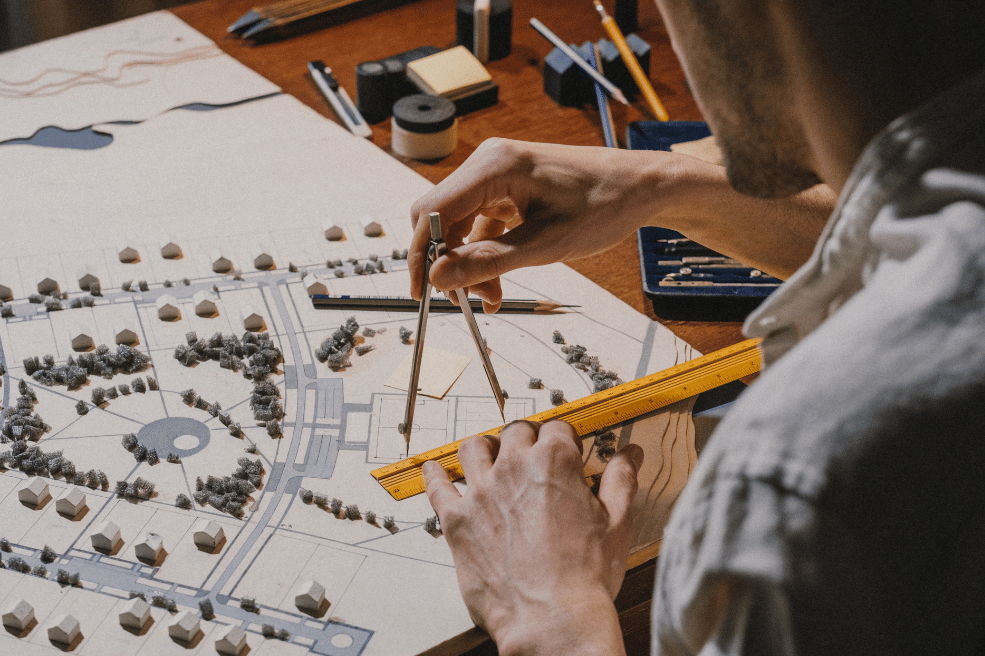
Universities are often equally interested in:
- Initial sketches
- Research
- Alternative ideas
- Material experiments
- Failed attempts
- Prototypes
- Technical development
- Design decisions
- Critical reflection
The Royal College of Art describes a portfolio as a carefully curated presentation that should demonstrate creativity, imagination, innovation and the applicant’s individual interests. For its architecture, communication and design schools, RCA specifically encourages applicants to include both finished work and evidence of their creative process.
The objective is not to prove that you are already a fully developed architect or designer.
It is to show that you have:
- Creative potential
- Relevant foundational ability
- A recognisable way of thinking
- The capacity to develop through the selected programme
This guide explains how Indian students can build a clear, distinctive and programme-specific portfolio for architecture and design courses abroad.
Architecture and Design Portfolios at a Glance
| Portfolio Element | What It Should Demonstrate |
|---|---|
| Project selection | Relevance, quality and range |
| Research | Understanding of context, users and problems |
| Sketches | Idea generation and observation |
| Process work | Development from question to outcome |
| Drawings | Spatial, visual or technical communication |
| Models and prototypes | Three-dimensional and material thinking |
| Final outcome | Ability to resolve and present an idea |
| Written captions | Context, role, methods and reflection |
| Layout | Visual hierarchy and communication |
| Personal work | Curiosity beyond academic assignments |
| Team projects | Collaboration and individual contribution |
| Portfolio sequence | A coherent creative story |
What Is an Architecture or Design Portfolio?
A portfolio is a selected and organised presentation of your creative and technical work.
It should help the admissions committee understand:
- What interests you
- How you approach a design problem
- How your ideas develop
- Which media you use
- What skills you currently have
- Which areas you want to explore next
Politecnico di Milano describes the portfolio as a selection of work from previous education or professional experience that should demonstrate the breadth of the applicant’s training, personal interests and design and technological abilities. It also emphasises neatness and clarity as evidence of the applicant’s ability to communicate intentionally.
A portfolio is therefore not just a gallery.
It is closer to a visual argument explaining:
This is how I think, this is what I care about, and this is why I am prepared for this course.
What Do Admissions Teams Look For?
Different universities and programmes use different criteria, but strong portfolios commonly demonstrate the following areas.
1. Creativity
Can you produce ideas that move beyond the most obvious solution?
Creativity does not always require dramatic or unusual forms. It may appear through:
- An original research question
- Sensitive use of materials
- A new representation method
- A thoughtful response to users
- A surprising reinterpretation of an ordinary place
2. Design Thinking
Admissions teams want to see how you move from:
- Observation
- Research
- Analysis
- Concept
- Testing
- Development
- Resolution
Showing only the final image can hide the most important part of your work.
3. Technical Ability
Depending on the programme, technical evidence may include:
- Plans
- Sections
- Elevations
- Construction details
- Material specifications
- User flows
- Wireframes
- Prototypes
- Typography systems
- Manufacturing methods
- Structural thinking
4. Communication
Can someone who has never seen the project understand:
- The problem
- The context
- Your idea
- Your process
- Your contribution
- The result
Good work can lose impact when the portfolio is confusing.
5. Personal Voice
The university should begin to understand what makes your work yours.
Your voice may emerge through recurring interests such as:
- Public space
- Community
- Sustainability
- Material craft
- Technology
- Accessibility
- Cultural identity
- Climate
- Storytelling
- Human behaviour
6. Potential
Admissions tutors do not expect every applicant to arrive with identical skills.
They are also assessing:
- Curiosity
- Experimentation
- Openness to learning
- Ability to reflect
- Capacity for future development
RCA advises applicants to communicate not only technical skills but also their values, methods, perspectives, story and what they hope to learn through the programme.
The Portfolio Does Not Replace Academic Eligibility
A visually impressive portfolio cannot always compensate for failing to meet mandatory academic requirements.
The university may separately evaluate:
- Previous qualification
- Academic grades
- Subject relevance
- English proficiency
- Professional recognition requirements
- Portfolio
UCL’s Bartlett School explains that architecture applicants may be asked for a portfolio, but their academic qualifications are still assessed against the course requirements. An application will not proceed when the formal academic criteria are not met.
At the master’s level, universities may evaluate the portfolio together with:
- Transcript
- CV
- Motivation letter
- Professional experience
- Interview
- Design assignment
Politecnico di Milano, for example, requires international applicants to architecture and design master’s programmes to submit a portfolio alongside academic documents and a CV.
Your portfolio must therefore strengthen an academically eligible application rather than exist separately from it.
Undergraduate vs Postgraduate Portfolios
The expectations for a bachelor’s applicant can differ significantly from those for a master’s applicant.
Undergraduate Architecture and Design Portfolio
Bachelor’s applicants may not have formal architecture or design projects.
Universities may instead look for:
- Drawing
- Photography
- Painting
- Collage
- Sculpture
- Model-making
- Craft
- Graphic work
- Fashion
- Creative writing
- Personal experimentation
The Bartlett explicitly states that an undergraduate architecture portfolio does not need to consist entirely of buildings. Applicants may include sketchbooks, drawings, photography, ceramics, sculpture, product design, fashion, sound work and other creative explorations.
A strong undergraduate portfolio should demonstrate:
- Observation
- Imagination
- Curiosity
- Willingness to experiment
- Ability to develop an idea
Do not fill the portfolio with copied building sketches simply because you are applying for architecture.
An original study of a market, home, street, object or material may communicate more creative potential.
Postgraduate Architecture Portfolio
A master’s architecture portfolio should usually provide stronger evidence of:
- Previous studio projects
- Spatial thinking
- Plans, sections and elevations
- Context analysis
- Design development
- Construction or material understanding
- Research
- Critical reflection
- Independent work
Aalto University’s current MSc Architecture requirements expect a coherent portfolio with consistent visual quality. It must contain at least three individual academic projects in addition to any team or professional work, and the applicant’s contribution to collaborations must be clearly identified.
Postgraduate Design Portfolio
A design master’s portfolio should demonstrate:
- Relevant design practice
- Conceptual thinking
- Research
- Iteration
- Technical or craft skills
- Professional direction
- Ability to communicate decisions
Aalto’s Visual Communication Design programme asks applicants to select projects and experiments that represent their current skills while also communicating the direction in which they want to develop their practice.
This future direction is important.
A postgraduate portfolio should not only say:
“This is what I have done.”
It should also suggest:
“This is where my practice can go next.”
Step 1: Read the Exact Portfolio Brief
Do not begin by downloading a general architecture-portfolio template.
Begin with the official programme requirements.
Check:
- Maximum pages
- Maximum file size
- Page dimensions
- PDF or online format
- Number of projects
- Whether videos are accepted
- Whether links are permitted
- Whether a cover page counts
- Required written statements
- Required original assignment
- Whether a CV must be included
- Naming format
- Submission deadline
Portfolio requirements can differ dramatically.
| University or Programme | Current Example Requirement |
|---|---|
| UCL Bartlett undergraduate architecture | PDF, maximum 10 pages and 5 MB |
| Aalto MSc Architecture | Maximum 24 pages, up to A3 |
| Aalto Visual Communication Design | Maximum 15 pages |
| Aalto Creative Sustainability | Only three selected projects |
| Politecnico di Milano architecture and design master’s | Digital portfolio, maximum 20 MB |
These examples demonstrate why there is no universal portfolio length.
A 24-page portfolio submitted to a programme requesting 10 pages may be rejected, truncated or left unread.
Following instructions is part of demonstrating professional discipline.
Step 2: Understand the Programme’s Direction
Do not submit the same portfolio unchanged to every university.
Research:
- Programme philosophy
- Studio themes
- Faculty interests
- Technical orientation
- Research areas
- Social or environmental focus
- Use of technology
- Industry partnerships
- Graduate projects
RCA advises students not to send a general portfolio without adapting it. Applicants should select work that demonstrates why they are suitable for the specific programme.
For example, a portfolio for:
Sustainable Architecture
May emphasise:
- Climate analysis
- Passive design
- Material lifecycle
- Adaptive reuse
- Community resilience
Computational Design
May emphasise:
- Parametric systems
- Digital fabrication
- Coding
- Simulation
- Iterative form generation
Interaction Design
May emphasise:
- User research
- Behaviour
- Prototyping
- Interfaces
- Testing
Product Design
May emphasise:
- Ergonomics
- Manufacturing
- Materials
- Prototypes
- User needs
Your core work may remain the same, but the selection, order and written emphasis should reflect the programme.
Step 3: Select Fewer, Stronger Projects
A portfolio is not an archive of everything you have completed.
It is an edited selection.
A strong portfolio may contain:
- Three to six substantial projects
- One or two shorter experiments
- Selected personal work
- Process material
The exact number depends on the page limit and discipline.
Aalto’s broader portfolio guidance notes that three strong projects can be sufficient for some specialisations and that five to seven projects may be adequate for many programmes. It prioritises relevance and quality over volume.
Use These Selection Criteria
Choose projects that demonstrate:
- Relevance to the programme
- Strong thinking
- Different skills
- Visible development
- Your individual contribution
- A memorable perspective
Avoid including five projects that demonstrate the same ability.
A balanced architecture portfolio might include:
- One major academic studio project
- One technically developed project
- One material or model-based exploration
- One urban or contextual study
- One personal creative project
A balanced communication-design portfolio might include:
- One branding system
- One editorial or typography project
- One information-design project
- One motion or digital project
- One self-initiated experiment
Step 4: Begin with Your Strongest Project
Admissions tutors may review a large number of portfolios.
Your opening pages should create immediate clarity and interest.
The first project should ideally be:
- Visually strong
- Relevant to the course
- Easy to understand
- Representative of your thinking
- One you can discuss confidently
Do not spend several pages on:
- A long introduction
- A decorative cover
- Generic quotations
- Software lists
- Personal photographs
A simple cover with your:
- Name
- Application number, where required
- Programme
- Year
is usually sufficient.
The work should begin quickly.
Step 5: Present Every Project as a Story
Each major project should have a clear beginning, development and resolution.
A useful structure is:
1. Context
What was the location, user group or design situation?
2. Brief or Question
What problem were you trying to address?
3. Research
What did you observe, measure or investigate?
4. Concept
What central idea guided the project?
5. Process
How did the proposal develop?
6. Outcome
What did you ultimately design or create?
7. Reflection
What worked, what changed and what did you learn?
Use this formula:
Problem → Research → Exploration → Decision → Outcome → Reflection
This creates a more meaningful project presentation than simply placing five attractive images on a page.
Step 6: Show the Process, Not Only the Result
Architecture and design are iterative disciplines.
Your portfolio should show how the outcome emerged.
Useful process material includes:
- Sketchbook pages
- Site observations
- Photographic studies
- Mind maps
- Concept diagrams
- Material samples
- Alternative plans
- Massing studies
- Failed models
- Prototype versions
- User-testing notes
- Design revisions
The Bartlett encourages applicants to include initial inspiration, sketches, unsuccessful attempts and the latest stage of their idea rather than limiting the portfolio to completed work.
RCA similarly asks architecture and design applicants to include sketchbooks, rough prototypes, research documents and other evidence of the creative journey.
Do Not Fake the Process
Avoid creating artificial sketches after completing the final project merely to make the portfolio appear process-driven.
Authentic process work usually contains:
- Questions
- Corrections
- Inconsistency
- Alternatives
- Decisions
It does not need to appear perfectly designed.
Step 7: Include Both Breadth and Depth
Breadth shows that you can work across different:
- Scales
- Materials
- Media
- Contexts
- Skills
Depth shows that you can develop one idea carefully.
A portfolio with breadth but no depth may appear superficial.
A portfolio with depth but no variation may appear narrow.
Architecture Example
Breadth may include:
- Urban analysis
- Building design
- Interior space
- Material experiment
- Photography
Depth may be shown through one project containing:
- Site research
- Concept development
- Plans
- Sections
- Structural thinking
- Models
- Details
- Final representation
Design Example
Breadth may include:
- Identity
- Editorial
- Digital interface
- Packaging
- Motion
Depth may be demonstrated through one complete project showing:
- User research
- Concept alternatives
- Prototypes
- Testing
- Final system
- Reflection
Step 8: Clearly State Your Role in Group Projects
Collaborative work is valuable.
It can demonstrate:
- Teamwork
- Communication
- Coordination
- Interdisciplinary practice
However, the university must understand what you personally completed.
For each team project, state:
- Team size
- Your responsibilities
- Drawings you produced
- Research you conducted
- Models you built
- Decisions you influenced
- Software or methods you used
Example:
Team: Four students
My contribution: Site mapping, environmental analysis, development of the circulation strategy, section drawings and construction of the 1:100 physical model.
Do not present a team render as individual work without explanation.
RCA and Aalto both explicitly require applicants to identify their contribution to collaborative projects.
Step 9: Use Captions That Add Meaning
Every project should include enough written information to be understood.
Useful details include:
- Project title
- Year
- Academic, professional or personal status
- Individual or group work
- Brief
- Location
- Materials
- Methods
- Software
- Your contribution
Aalto recommends combining images with concise contextual text such as the assignment, project context, materials and dimensions rather than writing long essays.
Weak Caption
Residential Project, Semester 6.
Stronger Caption
Adaptive Housing for Migrant Workers — Semester 6
Individual project exploring modular housing around shared courtyards in Kochi. Developed through interviews, climate mapping, hand models and passive-ventilation analysis.
The stronger caption explains why the project matters.
Step 10: Demonstrate Technical Ability Without Overloading Pages
Architecture applicants may include:
- Site plans
- Floor plans
- Sections
- Elevations
- Axonometric drawings
- Construction details
- Environmental diagrams
- Structural systems
- Material studies
Design applicants may include:
- Grids
- Typography
- User journeys
- Wireframes
- Design systems
- Manufacturing drawings
- Prototype details
- Material specifications
- Testing results
Do not place ten tiny technical drawings on one page.
Select the drawings necessary to communicate the main design logic.
A readable section is stronger than several drawings that become illegible when viewed on a laptop.
Step 11: Show Physical and Digital Experimentation
A portfolio consisting only of computer-generated renders may make it difficult to understand your broader design ability.
Where relevant, include:
- Hand sketches
- Physical models
- Material testing
- Photography
- Collage
- Printmaking
- Digital modelling
- Coding
- Animation
- Fabrication
- Prototypes
Different media reveal different thinking processes.
For example:
- A sketch can show speed and observation
- A model can reveal spatial understanding
- A prototype can demonstrate usability
- A diagram can explain systems
- A render can communicate atmosphere
Use each medium for a purpose.
Step 12: Include Personal and Self-Initiated Work
Personal work helps the committee understand what you explore without an academic assignment.
This may include:
- Travel sketches
- Photography
- Furniture
- Posters
- Urban observations
- Craft
- Illustration
- Film
- Writing
- Community projects
- Experimental models
- Independent digital work
Aalto’s New Media programme specifically welcomes passion projects, technical experiments and research work in addition to professional or formal artistic projects.
Personal work is particularly useful for undergraduate applicants and candidates changing fields.
Choose projects that reveal genuine interests rather than including hobbies only to fill pages.
Portfolio Guidance by Discipline
Architecture
Prioritise:
- Spatial thinking
- Site and context
- Plans and sections
- Human scale
- Models
- Materiality
- Environmental response
- Design development
Avoid making the portfolio entirely about photorealistic renders.
Interior and Spatial Design
Show:
- User experience
- Movement
- Atmosphere
- Material choices
- Lighting
- Details
- Furniture
- Existing-building analysis
- Sections and perspectives
Landscape Architecture
Include:
- Ecological systems
- Mapping
- Site research
- Topography
- Seasonal change
- Planting
- Water
- Public use
- Landscape sections
Urban Design
Show:
- Multi-scale analysis
- Movement systems
- Public space
- Demographics
- Land use
- Policy context
- Urban strategy
- Phasing
Graphic and Visual Communication Design
Prioritise:
- Concept
- Typography
- Hierarchy
- Image-making
- Research
- Systems
- Narrative
- Applications
- Process
Aalto’s Visual Communication Design programme values careful curation, process annotation and evidence of the applicant’s future creative direction.
Product and Industrial Design
Show:
- User need
- Research
- Form development
- Ergonomics
- Materials
- Manufacturing
- Prototypes
- Testing
- Final product
Interaction and UX Design
Include:
- Problem definition
- User research
- Personas where useful
- User journeys
- Information architecture
- Wireframes
- Prototypes
- Testing
- Changes based on feedback
Avoid presenting only polished application screens.
Fashion and Textile Design
Show:
- Research
- Concept boards
- Drawing
- Fabric experimentation
- Construction
- Pattern development
- Fittings
- Final garments
- Styling and photography
A Recommended Portfolio Structure
When the university does not prescribe a fixed structure, consider the following sequence.
Page 1: Cover
Include:
- Name
- Selected programme
- Application number where required
- Email address if appropriate
Page 2: Short Profile or Contents
You may include:
- One-paragraph creative profile
- Project list
- Key interests
Keep this page brief.
Pages 3–6: Strongest Project
Show:
- Context
- Research
- Process
- Technical work
- Final outcome
- Reflection
Pages 7–10: Second Project
Use a different scale, medium or skill.
Pages 11–13: Third Project
Demonstrate another relevant ability.
Pages 14–15: Shorter Experiments
Possible content includes:
- Models
- Photography
- Sketches
- Material studies
- Independent work
Final Page: Closing Project or Contact
End with:
- A memorable image
- A strong process-to-outcome comparison
- A concise creative statement
Do not include this exact page count when it conflicts with the programme’s requirements.
Layout and Graphic Design
Your portfolio design should support the work rather than compete with it.
Use Consistent Rules
Maintain consistency in:
- Margins
- Typeface
- Heading size
- Captions
- Page numbers
- Image spacing
- Project titles
Create Visual Hierarchy
Each page should clearly indicate:
- What to look at first
- What information comes next
- Which details are supporting evidence
Use White Space
Empty space can:
- Separate ideas
- Improve readability
- Emphasise key drawings
- Reduce visual fatigue
Do not fill every area of the page simply because space is available.
Limit Fonts
One or two readable typefaces are normally sufficient.
Avoid:
- Decorative fonts
- Extremely small captions
- Excessive colours
- Heavy backgrounds
- Complicated borders
- Unnecessary mock-ups
Design for a Screen
Digital portfolios are often reviewed on laptops.
Check the portfolio at normal screen size.
Ask:
- Are the plans readable?
- Are captions large enough?
- Do images load clearly?
- Is the contrast sufficient?
- Does the PDF move smoothly between pages?
File Size and Image Quality
Your portfolio must balance clarity with the upload limit.
Image Preparation
- Crop unnecessary backgrounds
- Straighten photographed work
- Correct lighting carefully
- Avoid excessive filters
- Export images at a sensible screen resolution
- Compress without making drawings unreadable
UCL advises applicants to scan or photograph original work at sufficient resolution so that the qualities of the work are not lost.
Test the Final File
Before submission:
- Download the exported PDF
- Open it on another device
- Check every page
- Test links where permitted
- Confirm the file size
- Confirm the file name
- Upload before the deadline
Do not assume that the file is correct because it opens inside the design software.
Building a Portfolio Without a Formal Design Background
Some master’s programmes accept applicants from:
- Engineering
- Business
- Computer science
- Social sciences
- Humanities
- Research
These applicants may not have a conventional studio portfolio.
Depending on the programme, suitable evidence may include:
- Research projects
- Technical prototypes
- Coding
- Data visualisation
- Publications
- Service-design projects
- Community work
- Business innovation
- Product development
- Independent creative experiments
RCA states that applicants from non-art and non-design backgrounds should still demonstrate creativity, imagination, innovation and their potential to benefit from the programme.
Politecnico di Milano allows certain applicants from non-design backgrounds to submit a thesis abstract or relevant internship report instead of a conventional design portfolio for selected design applications.
Do not imitate an architecture portfolio when your actual strength is research, systems thinking or technology.
Present your real background while demonstrating how it connects to the selected field.
Using AI in an Architecture or Design Portfolio
Generative AI can support activities such as:
- Brainstorming
- Image exploration
- Text editing
- Early visual studies
- Rendering experiments
However, it creates serious authorship questions.
Aalto’s current architecture admissions guidance requires applicants to declare where AI tools were used and for what purpose. It also states that the design concepts, renders and text presented as portfolio work must be produced by the applicant rather than a third party.
Safe Principles
- Follow the university’s AI policy
- Declare AI use when required
- Do not present generated images as hand-designed work
- Preserve evidence of your process
- Explain how AI influenced decisions
- Ensure you can defend every design choice
- Do not use AI to invent projects or research
AI should not make it impossible for the admissions committee to identify your own thinking.
Commercial Work and Third-Party Renders
Professional projects can strengthen a portfolio when your role is clear.
For each project, identify whether you worked on:
- Concept
- Drawings
- Modelling
- Rendering
- Research
- Documentation
- Client presentation
- Construction coordination
Do not imply that you designed the entire project when you produced only one part.
When a render was produced by:
- An external visualiser
- Another team member
- A professional studio
credit it clearly.
Your portfolio should demonstrate your ability—not only the resources available to your employer.
Common Portfolio Mistakes
1. Submitting the Same Portfolio Everywhere
Every portfolio should respond to the selected programme.
2. Showing Only Final Renders
Include research, sketches, models and development.
3. Including Too Many Projects
Editing is part of design.
4. Using Tiny Drawings
Technical work must remain readable.
5. Providing No Context
The reviewer should understand the brief and your response.
6. Hiding Team Contributions
State exactly what you completed.
7. Overdesigning the Layout
The portfolio design should not overpower the projects.
8. Copying Online Portfolio Templates
A familiar template may make your work appear generic.
9. Including Weak Work to Show Variety
Every project should contribute something useful.
10. Ignoring Personal Work
Self-initiated exploration can reveal curiosity and direction.
11. Using Uncredited AI or Third-Party Work
Authorship must remain clear.
12. Breaking the Page or File Limit
Official instructions are not optional.
13. Submitting Broken Links
Test all permitted digital content.
14. Using the Wrong University Name
Check the cover, captions and included motivation statements.
15. Waiting Until the Final Week
Curation, scanning, editing, compression and review take time.
A 10-Week Portfolio Preparation Timeline
Weeks 1–2: Programme Research
- Read portfolio requirements
- Study programme direction
- Review student work
- Create separate requirement sheets
Weeks 3–4: Project Audit
- Collect academic work
- Collect professional work
- Photograph models
- Scan sketches
- Identify missing process material
- Select the strongest projects
Weeks 5–6: Project Development
- Improve diagrams
- Redraw illegible technical work
- Document prototypes
- Complete relevant personal experiments
- Write initial project summaries
Week 7: Build the First Draft
- Establish page grid
- Sequence projects
- Add captions
- Identify gaps
Week 8: Review
Ask a lecturer, architect or designer to review:
- Clarity
- Relevance
- Originality
- Page hierarchy
- Weak projects
- Missing information
Week 9: Customise
Prepare programme-specific versions.
Adjust:
- Project order
- Captions
- Introduction
- Number of pages
- Technical format
Week 10: Final Checks
- Proofread
- Confirm authorship
- Compress the PDF
- Check every page
- Test on another device
- Upload early
Portfolio Review Checklist
Programme Fit
- Correct course identified
- Official instructions followed
- Relevant projects prioritised
- Portfolio customised
Content
- Strongest work included
- Weak projects removed
- Research shown
- Process shown
- Final outcomes shown
- Personal work included where relevant
Communication
- Every project has a title
- Brief is explained
- Individual contribution is clear
- Captions are concise
- Drawings are readable
- Sequence is logical
Visual Quality
- Consistent grid
- Consistent typography
- Sufficient white space
- High-quality images
- No distorted drawings
- No unnecessary decoration
Technical Submission
- Correct format
- Correct page count
- Correct file size
- Correct file name
- Links tested
- AI use declared where required
- Final PDF checked
How SPAN International Helps Architecture and Design Applicants
Architecture and design applications require more than uploading a collection of attractive work.
SPAN International supports eligible students with:
- Academic-profile assessment
- Architecture and design programme shortlisting
- Bachelor’s and master’s eligibility checks
- Portfolio-requirement comparison
- Project-selection guidance
- Portfolio sequencing and storytelling
- Programme-specific portfolio planning
- Motivation-letter preparation
- Academic and professional LOR guidance
- University recognition checks
- Application and deadline management
- Interview preparation
- Visa and residence-permit support
- Accommodation and pre-departure planning
Our team helps students understand what each university expects and organise their genuine work into a portfolio that clearly communicates process, ability and future potential.
Final Thoughts
A strong architecture or design portfolio is not defined by the number of projects, expensive software or photorealistic renders.
It is defined by how clearly it communicates:
- What you observed
- What question you explored
- How your ideas developed
- What decisions you made
- What you produced
- What you learned
Before submitting, ask six questions:
- Does the portfolio match the exact programme?
- Does it show both process and outcome?
- Can the reviewer understand every major project?
- Is my individual contribution clearly identified?
- Does the portfolio reveal a personal direction?
- Have I followed every technical instruction?
The strongest portfolio is not necessarily the one with the most polished pages.
It is the one that gives the admissions committee the clearest understanding of your creative thinking and the strongest reason to believe that your work can develop further through their programme.
Frequently Asked Questions
What is an architecture portfolio?
An architecture portfolio is a selected presentation of creative, spatial and technical work demonstrating how an applicant observes, researches, develops and communicates design ideas.
Is a portfolio compulsory for architecture courses abroad?
It is required for many architecture and design programmes, but requirements vary. Applicants must check the official course page.
How many projects should an architecture portfolio contain?
There is no universal number. Three to six strong projects may be sufficient in many cases, but the programme’s page and project requirements take priority.
How many pages should the portfolio have?
Follow the exact university limit. UCL currently allows a maximum of 10 pages for its undergraduate architecture portfolio, while Aalto permits up to 24 pages for its MSc Architecture portfolio.
Should I include a cover page?
A simple cover is normally appropriate unless the university instructs otherwise. Avoid using excessive space for decorative introductions.
Should every project be related to architecture?
Not necessarily, especially for bachelor’s applications. UCL welcomes creative work across drawing, photography, sculpture, ceramics, fashion, product design and other media.
Should I show unfinished work?
For architecture and many design programmes, yes. Process work can demonstrate how you develop ideas. Follow the exact programme guidance because expectations differ between disciplines.
Are hand sketches necessary?
They are not compulsory everywhere, but they can effectively show observation, speed of thought and idea development.
Do I need photorealistic renders?
No. Renders can support communication, but they should not replace plans, sections, research, models and process work.
Can I include professional office projects?
Yes, provided you explain your exact role and do not claim the work of other team members.
Can I include group projects?
Yes. Clearly identify the team size and your individual contribution. RCA and Aalto both require clarity regarding collaborative work.
Can I include personal projects?
Yes. Personal work can demonstrate curiosity, experimentation and interests beyond formal coursework.
Can a non-design graduate submit a portfolio?
Yes, for programmes accepting interdisciplinary applicants. The portfolio may include research, coding, technical prototypes, service design, publications or independent creative work.
Should I use the same portfolio for every university?
No. The main projects may remain similar, but selection, sequence, captions and format should be adapted to each programme.
Should I include my CV inside the portfolio?
Only when required or appropriate. Aalto’s MSc Architecture portfolio currently requires a one-page CV within the document. Other universities may request it separately.
Can I use AI-generated images?
Check the programme’s policy. Where AI is used, authorship should remain clear and disclosure may be required. Aalto Architecture currently requires applicants to declare how AI tools were used.
What file format is normally required?
PDF is the most common format, but file size, page dimensions and permitted links vary by university.
Should I add long project descriptions?
No. Use concise writing explaining the brief, context, process, role and outcome. The portfolio should remain primarily visual.
What is the biggest portfolio mistake?
The most common mistake is presenting attractive final images without showing the thinking, development and decisions that produced them.
Can SPAN International help review an architecture portfolio?
Yes. SPAN International supports eligible applicants with programme research, portfolio planning, project selection, sequencing, applications, interviews, visas and pre-departure preparation.