
STUDY IN EUROPE ALMOST FOR FREE
Study in Germany — 100% Free Tuition at Public Universities
Check Your Germany Eligibility
The real numbers
What It Actually Cost to Study in Germany
The Advantage
Why Kerala Students Choose Germany
400+ Public Universities
Including TU Munich, RWTH Aachen, Heidelberg, LMU Munich — all globally ranked, all free for international students.
Post-Study Stay-Back
Germany gives graduates a stay-back period to find suitable work, and employers hire international graduates directly — no sponsorship hurdle to clear first.
Build a Career in Europe
A German degree and a few years of German work experience open doors across the EU's single job market — 27 countries, one career.
1,000+ English-Taught Programs
No German required for most Master's programs. Learning A1–A2 German helps with part-time jobs and daily life but isn't mandatory.
Earn While You Study
Students in Germany can work 140 full days or 280 half-days a year, at €10–15/hour — enough to cover most monthly living costs.
500+ Fortune Global Companies
Siemens, BMW, SAP, Bosch, Volkswagen, Allianz — Germany's industrial powerhouse actively hires international graduates.
Where You Could Study
Universities in Germany
Don't see your preferred university? Talk to a Span counsellor →
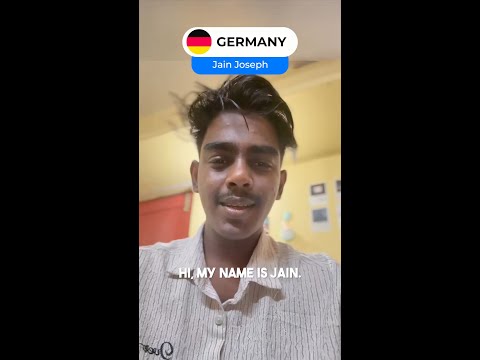
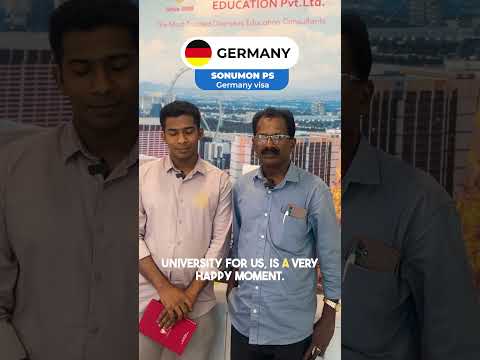
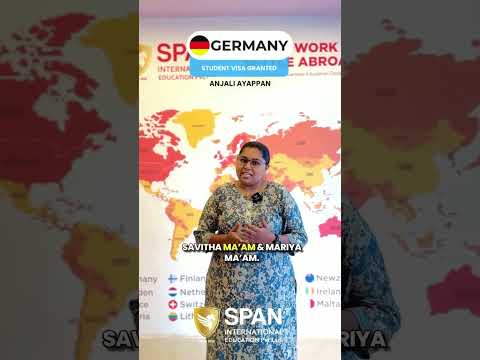
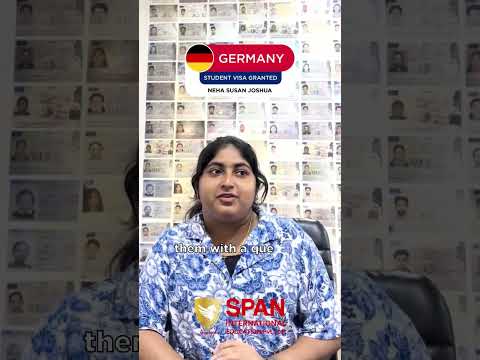
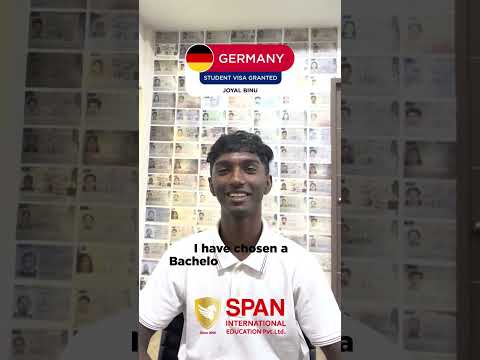
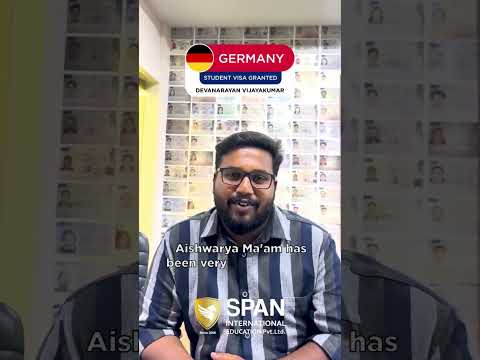
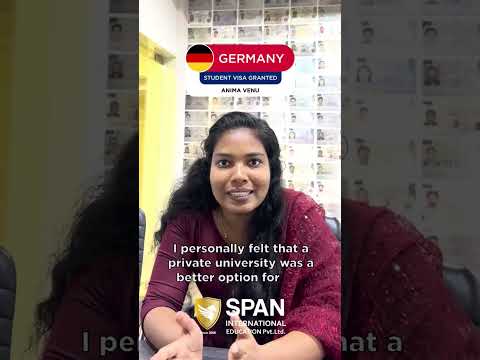
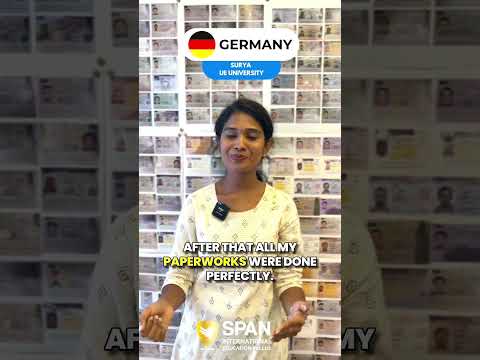
Our Student Success Stories



The Process
Your Path to Germany, Step by Step
Free Counselling & Profile Review
A free conversation with our Germany counsellors. We review your academics, recommend 6–8 universities that genuinely fit your profile, and lay out your timeline and budget.
APS Academic Verification
German universities require APS verification of your academic record before they'll consider your application. We help you get your transcripts and certificates in order so your submission isn't sent back. Processing takes 2–3 months — this is where most students working alone lose their intake.
University Applications
We work on your SOPs, document translations and recommendation letters, then guide your applications to 6–8 universities through UniAssist or their direct portals.
Admission Letters Arrive
Offers typically land 4–8 weeks after submission. We help you weigh universities, cities, course structure and career prospects before you accept.
Financial & Insurance Planning
We walk you through what a year in Germany actually costs — blocked account planning with providers like Expatrio, Coracle and Fintiba, student health insurance options, and how to structure savings or sponsor funds.
Pre-Departure & Arrival Support
Flight planning, accommodation guidance, a pre-departure orientation session, and an introduction to Span alumni already in Germany — so you land with people to call and a plan for your first week.
Span International is an independent education consultancy. We are not affiliated with, or authorised by, any government, embassy or consulate, and we do not process or guarantee any official documents. All applications to public authorities are made by the student directly.
Plan Your Timing
German University Intakes
Winter Semester
Summer Semester
Questions Answered
Germany Study FAQs
Yes. Public universities in Germany — including TU Munich, RWTH Aachen, Berlin, Heidelberg, and 400+ others — charge zero tuition fees for international students at Bachelor’s and most Master’s levels. You only pay a semester contribution of ~€150–350 (₹13,000–₹30,000) that covers public transport and student services. Private universities and a few states like Baden-Württemberg charge fees, but the vast majority remain free.
The APS (Akademische Prüfstelle) is mandatory for all Indian students applying to German universities since 2022. It verifies the authenticity of your academic documents. Processing takes 2–3 months and costs around ₹18,000. We help you apply and prepare the paperwork — most DIY students lose months because they don’t start APS early enough.
€11,904 for the 2024–25 academic year (revised annually by the German government). That’s approximately ₹10.7 lakh deposited in a bank like Expatrio, Coracle, or Fintiba. It’s your money — you withdraw €992/month after arrival to cover living costs. We help you set this up with our partner banks.
Yes. There are 1,000+ Master’s programs taught entirely in English across German universities. For Bachelor’s, English options are more limited but growing. We recommend learning at least A1–A2 German to help with daily life, part-time work, and a smoother transition.
Many German universities now accept 3-year bachelor’s degrees (especially with strong grades), but some still require 4 years. We’ve successfully placed students with 3-year B.Com, BA, and BBA degrees in Germany. We identify universities matching your specific profile during the free counselling.
Yes. International students can work 140 full days or 280 half-days per year. Typical hourly wages are €10–15 (₹900–₹1,400), which is enough to cover most monthly living expenses. Common jobs: cafés, supermarkets, research assistant roles, working student positions at companies (well-paid).
Entry-level salaries for engineering, IT, and tech graduates range from €45,000–€60,000 per year. After tax, that’s roughly €2,800–€3,500/month — comfortable living with plenty left over for savings or loan repayment.
After you submit at VFS, the German embassy typically takes 6–12 weeks to decide. We recommend starting the visa application 4 months before your intake to be safe. Our 95% visa success rate comes from thorough documentation and mock interviews.
There’s no official age limit, but practically, students over 35 may face additional questions on visa intent. We’ve successfully placed students up to age 32 in Master’s programs. Strong work experience helps in such cases.